

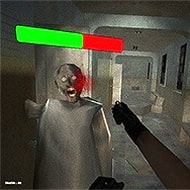
Granny 3 Return To The School

Granny 4: The Rebellion

Granny Escape Together

Granny Remake

Granny Revamp

Granny Unblocked

Granny’s House



















![Hello Kitty [HORROR] img](https://grannyrevamp.com/wp-content/uploads/2026/09/hello-kitty-horror.jpg "Hello Kitty [HORROR]")




Bacon May Die delivers a relentless combat experience built on three core pillars: fluid movement, strategic weapon switching, and maintaining constant offensive pressure. Players control a tenacious hero battling escalating waves of foes, a test that demands split-second decisions and perpetual adaptation. By fusing intuitive controls with meticulously layered encounters, Bacon May Die crafts a challenge that evolves through sheer intensity and smart enemy interplay rather than convoluted mechanics.
The game’s foundation is its razor-sharp, responsive combat system. Every attack, dodge, and weapon swap is engineered for immediacy, empowering players to counter threats instinctively. Bacon May Die is a dance of aggression where stagnation is punished; the core loop incentivizes perpetual motion to avoid being surrounded and overwhelmed.
This design masterfully balances accessibility with deepening mastery, using simple inputs while progressively ramping up enemy density and introducing more sophisticated adversary behaviors.
Adversaries in Bacon May Die employ distinct tactical approaches to disrupt player rhythm. Aggressive rushers close distance quickly, while projectile-based foes force evasive maneuvering. This variety compels players to dynamically prioritize targets and continuously adapt their positioning and attack patterns.
The game’s escalating challenge stems from intelligent, shifting combinations of these unit types, ensuring no two encounters feel identical.
A diverse arsenal lies at the heart of strategic play, with each weapon fundamentally altering combat dynamics and encouraging experimentation. Players might leverage broad-swinging tools for crowd management or switch to precision instruments for high-value targets, creating a personal combat style.
Strategic loadout selection and mid-fight weapon cycling are crucial for mastering the game’s more demanding stages.
A frequent query is whether Bacon May Die purely rewards aggression. While maintaining pressure is key, mindless rushing leads to vulnerability—the ideal strategy is a calculated, mobile onslaught. Another common concern involves perceived difficulty spikes; these walls typically require refined movement, smarter positioning, and adept target prioritization rather than mere statistical upgrades.
Bacon May Die distinguishes itself by merging non-stop action with clear, consistent combat rules. Its unwavering focus on kinetic movement, tactical adaptability, and meaningful weapon choice forges an experience that stays intensely engaging, tough yet fair, and deeply rewarding across countless playthroughs.