

Granny 3 Return To The School

Granny 4: The Rebellion

Granny Escape Together

Granny Remake

Granny Revamp

Granny Unblocked

Granny’s House























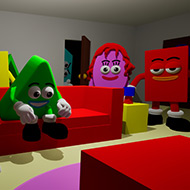
Save the Shapes is centered on structured thinking, visual clarity, and steady pressure management. Players are placed in scenarios where fragile shapes must be protected from incoming hazards that follow understandable rules. Instead of demanding constant speed, Save the Shapes encourages planning, calm reactions, and learning how threats overlap and interact as each stage unfolds.
The core task in Save the Shapes is to ensure that all shapes remain intact until the end of a level. Threats appear in predictable patterns, giving attentive players enough time to react and adjust. The game emphasizes responsibility, as one poorly timed action can put multiple shapes at risk.
Save the Shapes avoids unnecessary complexity by introducing one concept at a time. This ensures that players always understand why a failure occurs and how to improve on the next attempt.
Each level in Save the Shapes is carefully structured to teach awareness and prioritization. Early stages focus on protecting a single shape, while later stages introduce multiple shapes placed in different areas. The game increases difficulty through combinations rather than speed spikes.
This approach allows players to build skill naturally without feeling overwhelmed.
Save the Shapes provides several intervention options designed for critical situations. These tools are intentionally limited, pushing players to observe patterns before acting. Poor timing wastes resources, while smart timing can stabilize an entire level.
Learning when not to use these tools is just as important as knowing how they work.
Players often ask whether Save the Shapes allows recovery after mistakes. In many cases, fast reassessment and reprioritization can prevent failure. Another common question concerns replay value. While mechanics stay consistent, the variety of layouts and threat combinations keeps the game engaging.
Save the Shapes succeeds by respecting player intelligence. Its clear rules, steady learning curve, and emphasis on thoughtful action create a game experience built on control, awareness, and steady improvement.