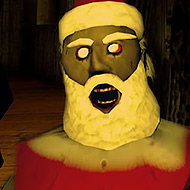
In Granny Smith you start every run already moving — no warm-up, no tutorial lap, just a granny at a dead sprint down a city street with traffic closing in from every direction. The condition you’re stuck with from the first second is that stopping was never one of the options built into the controls, and that single fact shapes everything else about how the game plays.
| Genre |
Endless runner |
| Setting |
City streets, rotating locations |
| Core Task |
Dodge traffic, collect coins, chain near misses |
| Playable Characters |
Multiple costumes unlocked with coins |
| Best For |
Players who like fast reflex-based scoring runs |
The Chase That Never Lets Granny Smith Slow Down
The core loop is simple to describe and hard to master: swipe to jump, swipe down to slide, and lean into turns at intersections, all while forward speed keeps climbing on its own. There’s no brake, no pause between obstacles, and no way to back up and reconsider a lane choice once you’ve committed to it.
New players tend to treat the first few seconds of a run as a warm-up the way most runners do, but the game never actually offers one. A car can clip you from the very first step, which is why regular players talk about the opening stretch of any run as the part that punishes complacency fastest, not the later, faster sections.
That constant forward pressure is also what makes the controls feel different from a typical arcade dodge-and-collect game. Every decision is made half a second before you’d like it to be, and the game leans on that discomfort on purpose.
Reading Miami’s Streets Before They Read You
Runs unfold along dense city streets built around Miami-style scenery, with lanes packed close enough that a single wrong swipe carries you into the next hazard over. Buses, subway trains crossing at intersections, and stray surfboards flung from truck beds all share the same road space, often within a second or two of each other.
Beginners consistently misjudge lane width, treating the street as wider than it plays, and clip the edge of a bus they thought they’d cleared. Learning to read an obstacle cluster before committing to a jump, rather than reacting to the nearest hazard alone, is what separates a short run from a long one.
By the time a run stretches past its first minute, obstacles start layering, like a blimp drifting low right as a car merges into the same lane. That overlap is where most unplanned endings happen.
Jumps, Slides, and the Turns Granny Smith Can’t Afford to Miss
Cars and low barriers call for a jump, blimps and truck overhangs call for a slide, and intersections call for a full turn rather than either. Mixing these up is the single most common early mistake, since a slide timed for a car instead of a jump ends a run instantly.
As speed increases, the window for each input tightens, and inputs that felt comfortable early in a run start arriving late by the second or third city block. Players who keep pace tend to commit to a move slightly before the obstacle looks close enough to react to, trusting the pattern rather than the visual cue in the moment.
Turns are the move most players underuse, since holding a straight line feels safer, but a well-timed turn is often the only way to escape a lane that’s about to be blocked by two obstacles at once.
Coins, Costumes, and the Wonder Gran Unlock Path
Coins scattered along every street fund a small wardrobe of alternate looks, each requiring a different coin total to unlock. The costume roster includes:
- A 70s hippy gran look, usually the cheapest early unlock
- Wonder Gran, a caped costume that’s become the most recognized alternate look
- Zombie Gran, a green-tinted variant popular for its exaggerated animation
- A penguin costume, the oddest unlock and a favorite among players chasing every option
None of the four change how a run plays mechanically, but collecting all of them has become its own informal goal for players who’ve already pushed their scores as far as they comfortably can. Coin collection during a run tends to take a back seat the moment an obstacle cluster appears, which is exactly when a careless swipe toward a coin costs the run.
Unlocking every costume usually takes several runs’ worth of coins. A single clean run rarely generates enough to buy more than one look at a time.
The Coin Multiplier and When Risk Pays Off
A Coin Multiplier power-up occasionally appears mid-run, and grabbing it turns every subsequent coin into a bigger score gain for a limited stretch. The catch is that reaching it often means cutting across a lane you’d otherwise avoid, so taking it is a small gamble against whatever obstacle sits just past the pickup.
Chaining close dodges back to back — what regular players refer to as a near-miss run — stacks additional score on top of whatever the multiplier is already providing. Clipping an obstacle even slightly breaks that chain, so the highest-scoring runs tend to come from players willing to cut dangerously close to traffic rather than play it safe.
Deciding when to break off a multiplier stretch rather than push it one obstacle further is a judgment call. It’s usually what separates cautious runs from the ones that end up on a leaderboard.
Robots, Dinosaurs, and the Obstacle Sets That Break New Runners
Later stretches of a run introduce stranger hazards on top of the usual traffic — dinosaurs lumbering across intersections, robots that occupy more lane space than they look like they should, and the odd dolphin arcing overhead. None of it is explained; it simply starts appearing once a run has gone on long enough.
These additions are also where the game draws the most criticism, since a robot and a dinosaur sharing a lane with normal traffic can feel like an unfair pile-on to players who were only just getting comfortable with cars and buses. Recognizing each hazard’s silhouette quickly enough to react is a skill that only comes from dying to it a few times first.
Once the wackier obstacle sets appear, the smart move is to fall back on pattern recognition rather than trying to consciously process every new shape. There simply isn’t time to think through anything unfamiliar at that speed.
How Far Regular Players Actually Get
Progress in Granny Smith is measured less in distance markers and more in how long a player can hold a clean lane before a mistimed jump ends things. New players often see a run end within the first cluttered intersection, while confident players can push a single life well past several stretches of layered traffic before a slip catches up with them.
The four unlockable costumes give the scoring loop a secondary goal once raw distance stops improving much. Plenty of players openly admit the coin grind toward Wonder Gran or the penguin costume becomes the real motivation long after chasing a personal best has lost its novelty.
Consistency, not raw reflexes, tends to separate the players who post high scores from everyone else, since the obstacle patterns repeat more than they first appear to once you’ve run the same stretch of street a few dozen times.
What unlocks the Wonder Gran costume in Granny Smith?
Wonder Gran, along with the other alternate looks, unlocks once you’ve collected enough coins during runs to cover its cost. It doesn’t require reaching a specific distance or score, just steady coin collection across multiple attempts.
Why do the streets in Granny Smith change from one run to the next?
The city backdrop rotates to keep the obstacle mix from feeling identical every time. Traffic patterns, subway crossings, and set pieces like blimps or flying surfboards get remixed into slightly different combinations each time you play.
How does the near-miss combo work in Granny Smith?
Passing an obstacle at close range without touching it chains into the next close pass, building a growing score bonus for as long as the streak holds. A single clipped obstacle ends the chain immediately, resetting the bonus back to nothing.
Granny Smith works because it never gives you a moment to relax into the run — between the Coin Multiplier gambles, the near-miss chains, and the growing wardrobe led by Wonder Gran, every choice on the street costs something if you get it wrong. That tension is what keeps players coming back long after the first few runs have ended in a clipped bus.