

Granny 3 Return To The School
Granny 4: The Rebellion
Granny Escape Together
Granny Remake
Granny Revamp
Granny Unblocked

Granny’s House







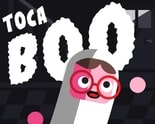

The scares in Toca Boo don’t work the way a jump scare usually does — you’re not trying to shock anyone, you’re trying to make a prospective buyer visibly cringe, turn around, and walk straight out of your house without signing anything.
| Genre | Ghost-perspective haunting game |
| Setting | A house during an open-house showing |
| Core Task | Creep out prospective buyers before they commit to the house |
| Win Condition | Every buyer leaves without making an offer |
| Best For | Players who enjoy short, mischief-driven horror-comedy sessions |
You control a ghost gliding through a house mid-showing, and your job isn’t to terrify anyone into fleeing screaming — it’s to make them uncomfortable enough that they quietly decide the place isn’t for them. That distinction matters mechanically, since a full-on scare can spook a buyer into leaving fast, but an awkward, lingering cringe often does more damage to their interest in the house.
New players tend to go big immediately, throwing every unsettling trick at the first buyer they see. That usually backfires, since a buyer who’s startled once becomes alert and harder to affect again for the rest of the showing.
Pacing a haunt across the length of a walk-through, rather than emptying every trick in the opening seconds, is the skill the game is actually testing. A buyer who’s still comfortable halfway through a showing is far easier to unsettle than one who’s already on edge.
Buyers move through the house on their own schedule, drifting from room to room while you glide around holding the movement control to close distance or peel away before they turn around. Positioning matters more than reaction speed, since lining up behind a buyer just before they enter a new room sets up a cringe with almost no risk of being noticed early.
Beginners often chase buyers directly instead of anticipating where they’re headed, which leaves the ghost stuck reacting a beat too late. Learning the rough loop each buyer walks through a room lets you get ahead of them instead of trailing behind.
By the time a second or third buyer enters the house, the earlier haunts have usually made the whole showing feel tense, and later buyers react faster to smaller provocations than the first one did.
Each visiting buyer reacts a little differently, and part of the challenge is figuring out what unsettles a specific buyer rather than repeating one trick across everyone in the house. Some brush off a mild haunt entirely and need a slower buildup, while others cringe hard from something small and barely need a second push.
That variation is one of the more divisive parts of the game among players, since it can feel inconsistent the first few playthroughs — a trick that worked perfectly on one buyer does almost nothing to the next. Once you notice the pattern instead of expecting uniform reactions, the variety becomes part of the appeal rather than a frustration.
Watching a buyer’s body language shift from curious to unsettled, sometimes seconds before they actually react, is a detail easy to miss at first. Players who’ve spent real time in the house start reading that shift before the buyer even turns around.
The approach is where most rounds are decided, and it breaks down into a few distinct beats. Closing the distance quietly while a buyer is distracted by the room sets up everything that follows. The reveal is the moment you actually let them notice something is wrong, timed to catch them mid-thought rather than the instant they walk in. The retreat right after matters just as much as the reveal, since lingering too long after a successful cringe can tip a subtle haunt into an outright scare that buyers process completely differently.
Making buyers leave in Toca Boo comes down to stacking these smaller cringe moments rather than landing one dramatic scare, since a house that feels quietly wrong for an entire showing loses buyers more reliably than a single jump. Buyers who don’t react right away usually aren’t ignoring you — they’re processing the first unsettling detail before the next one lands, which is why a round rarely ends on the very first haunt attempted.
Toca Boo works because the tension never comes from one big scare landing — it comes from watching a buyer’s confidence in the house quietly erode across an entire showing until they’d rather leave than sign. That slow unraveling, more than any single jump, is what makes an empty house feel like a win.